
Termite Inspection and Treatment in Lancaster
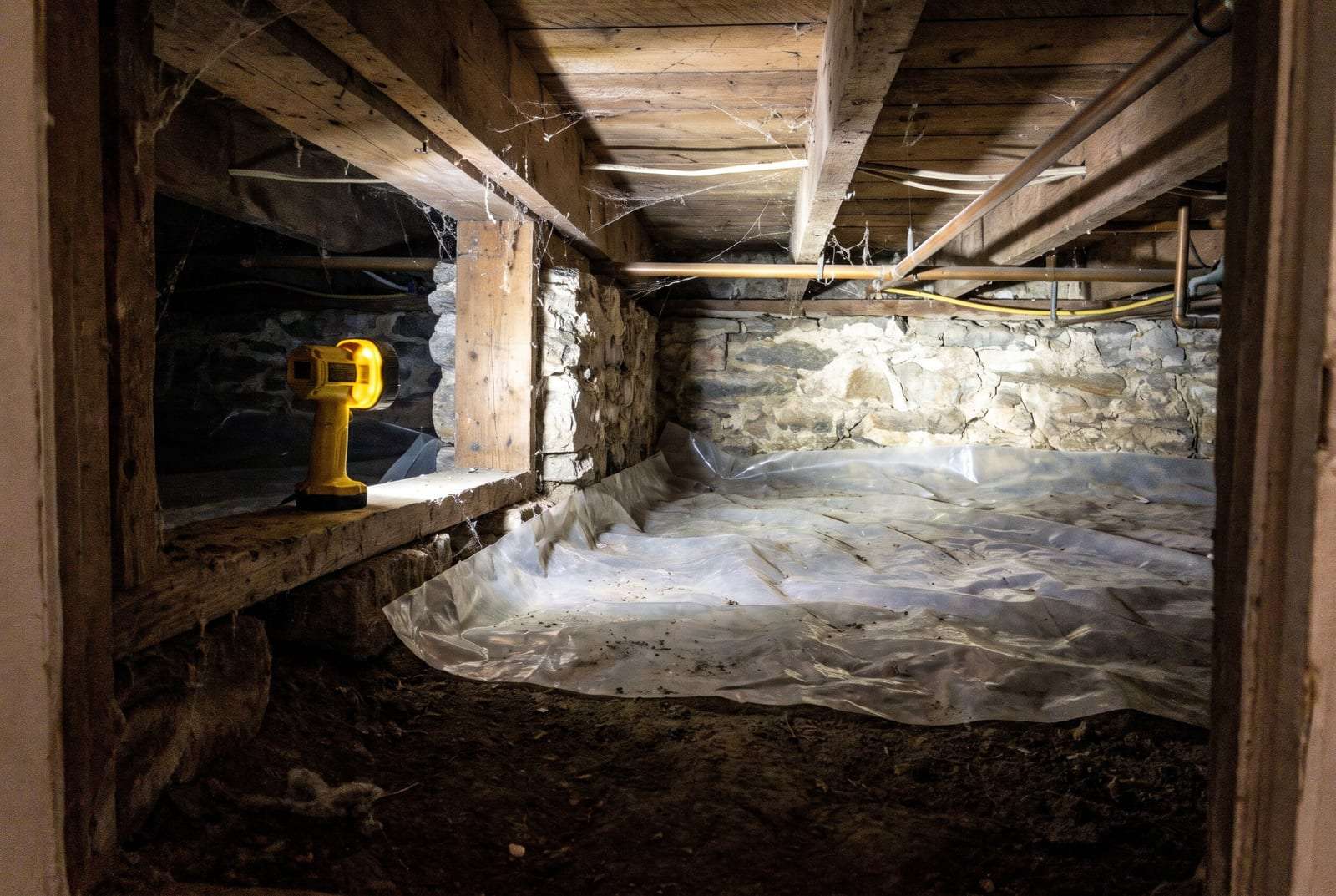
Lancaster has plenty of the houses termites favor: stone foundations with gaps in the old mortar, porches whose posts sit close to the ground, and wooden sills resting on damp stone. The termite here is the eastern subterranean termite, which lives in the soil and reaches wood through cracks and the mud tubes it builds.
Termite inspections and treatment are available for buyers, sellers and owners who have found damaged wood. An inspection also looks for carpenter ants, carpenter bees and powderpost beetles, the other wood-destroying insects.
Mud Tubes, Hollow Wood and Weakened Timbers
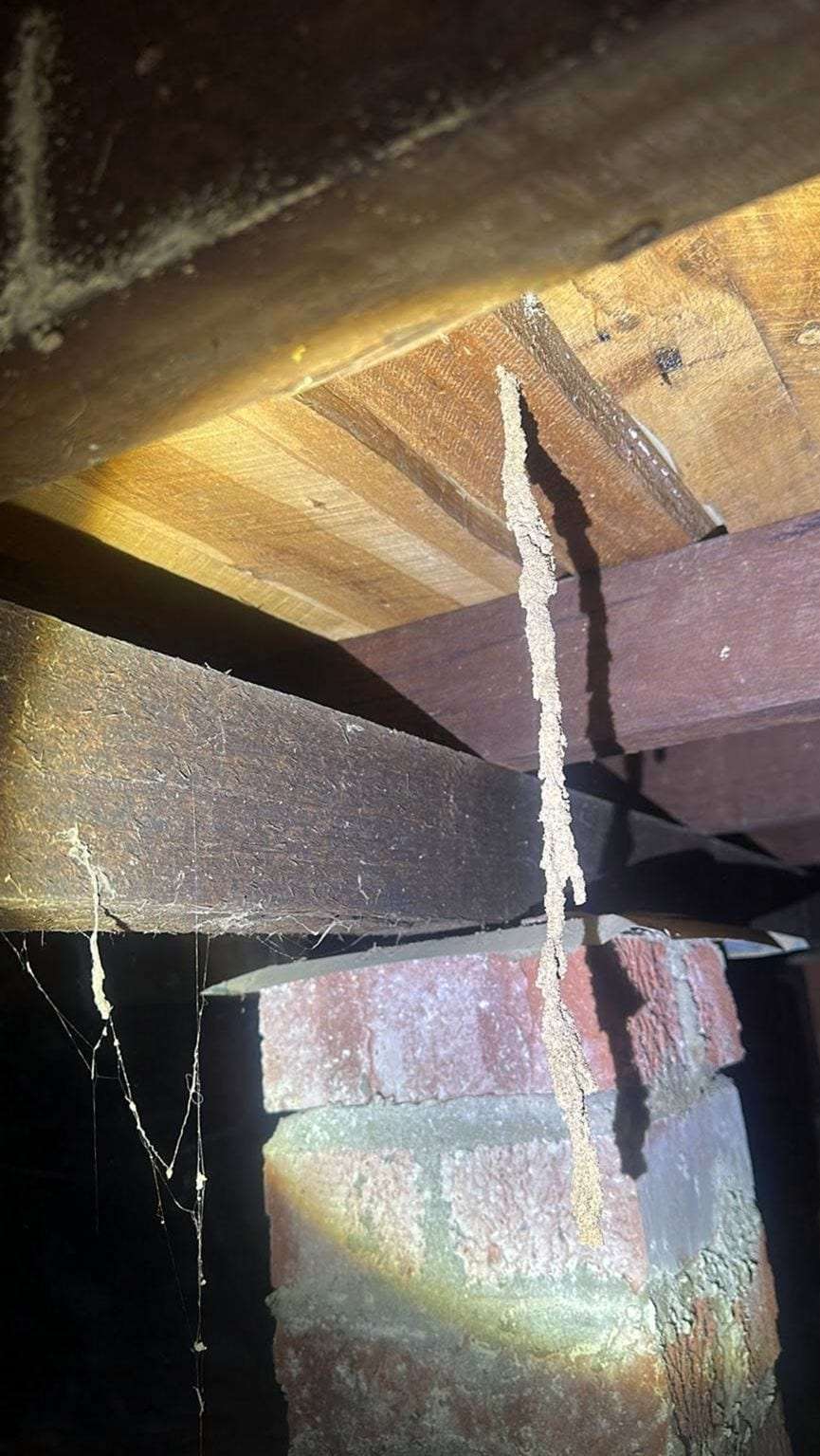
Subterranean termites dry out in open air, so they travel inside the soil, inside the wood and inside mud tubes built across anything in between. A tube about as wide as a pencil, running up a foundation wall or a pier, is the clearest outside sign. Some tubes hang down from a joist toward the ground, built from the wood back to the soil.
Inside, termites eat out the soft layers along the grain and leave a thin shell, so a board can look sound and still sound hollow when tapped. Their galleries are lined with a mix of soil and droppings that looks like dried mud. Carpenter ants leave cleaner, smoother tunnels and push out coarse sawdust instead.
The sills, joists and posts in crawl spaces and under porches are at the greatest risk, because they sit closest to the soil and stay damp longest.
| Where to look | What you may see | What it may mean |
|---|---|---|
| Foundation walls and piers | Mud tubes about the width of a pencil, running up from the soil | Termites moving between soil and wood; fresh, damp tubes suggest current activity |
| Crawl-space joists and beams | Hanging tubes, darkened timbers, soft spots when probed | Feeding in the floor frame |
| Sills on the foundation | A sill that sags, crumbles or pulls away from the stone | Long-term feeding, rot from moisture, or both |
| Baseboards, door frames and window trim | A hollow sound when tapped; bubbling paint | Galleries eaten out behind a thin surface |
| Window sills and floors near doors | Small piles of shed wings, all the same size | A swarm came from inside the house or under it |
| Hardwood floors and old beams | Pin-size round holes with fine powder below | Powderpost beetles, another wood-destroying insect |
Termites need moisture as much as wood. Lancaster’s humid summers, damp basements and crawl spaces with bare soil keep the ground along a foundation moist, and wood touching the soil, such as porch steps or a woodpile against the wall, gives a colony a direct path in. A spring swarm at a window or in the basement is often the first sign a homeowner sees, and the reason to call.
Termite Swarmers Compared With Flying Ants
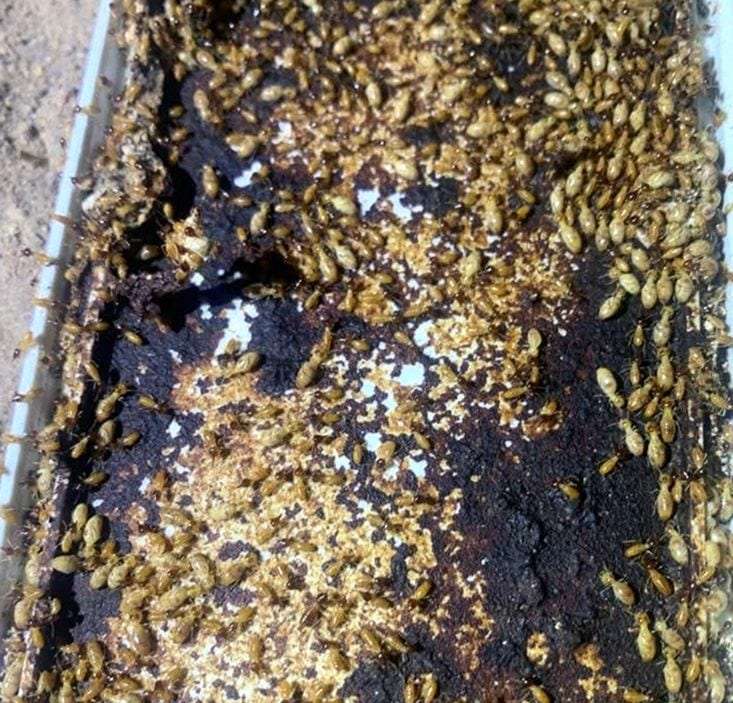
The termites that do the damage are pale, soft-bodied workers that stay hidden in the soil, in their tubes and inside the wood. What people see are the swarmers: dark winged adults that leave a mature colony on a warm spring day to start new ones. Flying ants swarm too, and from across the room the two look alike. Swarmers do no damage themselves, but they came from a colony that is still feeding.
| Feature | Termite swarmer | Flying ant |
|---|---|---|
| Waist | Thick and straight-sided, no pinch | Narrow and pinched between body sections |
| Antennae | Straight, like a string of beads | Bent at an elbow |
| Wings | Two pairs of equal length, much longer than the body | Front pair longer than the back pair |
| After the swarm | Wings snap off easily and pile up on sills | Wings stay on longer; fewer loose wings |
| Season indoors | Usually spring, on a warm day after rain | Late spring through summer, depending on the kind |
Confirming Termites and Treating Around the Foundation
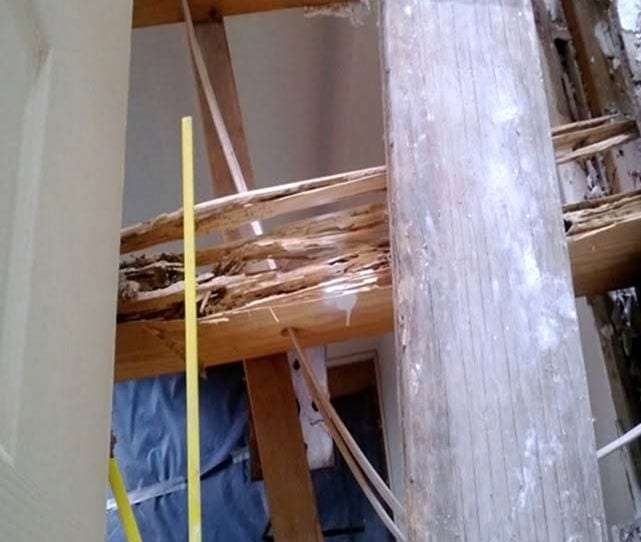
A termite inspection follows the foundation all the way around, inside and out: basement walls, the crawl space, sills and joists, porches, the garage and any wood touching the soil. Suspect wood is tapped and probed.
Treatment for subterranean termites usually takes one of two forms. A liquid termiticide applied to the soil along the foundation, trenched outside and drilled through slabs where needed, puts a treated zone between the colony and the house. Bait stations set in the ground around the house work more slowly, as termites carry the bait back to the colony.
The moisture around the wood matters as much: gutters that empty at the foundation, bare soil in a crawl space, a porch step buried in mulch. Damaged wood that carries weight may need a carpenter’s repair once the termites are dealt with.
Why do termites swarm in spring, and does a swarm mean the house has them?
A colony sends out swarmers once it is several years old, usually on a warm spring day after rain. Swarmers coming out indoors, at a basement window, from a crack in the slab or out of a wall, nearly always mean the colony is feeding in or under the house.
A swarm outdoors, from a stump or a woodpile, shows a colony nearby rather than in the house, though the foundation close to it is still worth checking for tubes.
Who asks for a wood-destroying insect report when a house is sold?
Usually the lender or the buyer, before closing. The report records live insects, signs of past activity and visible damage from termites and other wood-destroying insects, as found on the day of the inspection in the areas that could be seen and reached.
When booking, ask whether the report your lender or agent needs can be provided, and give the closing date.
Clearing Basement Walls and the Crawl-Space Hatch
Termite signs hide behind whatever is stacked against a foundation wall, so an inspection finds more when the walls are clear.
- Pull stored boxes, shelving and furniture a foot or two away from the basement walls.
- Make sure the crawl-space hatch opens, with nothing stored on it or in front of it.
- Move firewood and lumber away from the outside of the foundation.
- Clear stored items from under porches and stairs.
- Leave mud tubes unbroken until the inspection.
- Keep a few swarmers or loose wings in a sealed bag or jar, if you found any.
- Find any paperwork from earlier termite treatments.
Termite Inspections for Buyers, Sellers and Owners
Call or send a request, and mention the closing date if the house is being bought or sold.